
OEM vs ODM vs OBM
IN DEPTHAlso: Original Equipment Manufacturing, Original Design Manufacturing, Original Brand Manufacturing
OEM, ODM, and OBM describe who owns the design, the tooling, and the brand in a manufacturing relationship.
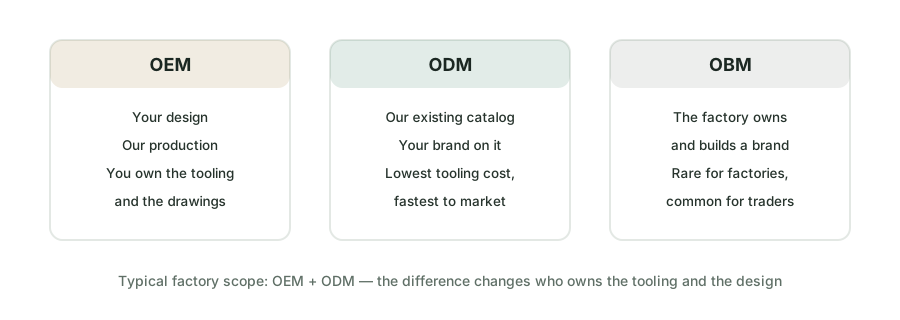
These three terms describe a spectrum of who owns the product, from the buyer supplying everything to the factory owning everything. Most stainless-steel drinkware factories operate in the first two categories, and many buyers start at one point and move along the spectrum as their brand grows. The distinction matters because it changes who owns the tooling, who owns the design files, and how fast you can launch.
OEM: your design, our production
In OEM (original equipment manufacturing), you supply the drawings, specifications, and brand artwork. The factory produces to your requirements. You own the design and, where you have paid for them, the custom tooling. This is the right route when you need a product that does not exist in a catalog, but it carries longer sampling and higher tooling costs.
ODM: our catalog, your brand
In ODM (original design manufacturing), the factory already has a developed product and you adapt it with your logo, color, and packaging. This is the fastest and lowest-tooling route to market, because the engineering, tooling, and testing have already been done. Your differentiation is the brand, not the physical design.
| Model | Who owns the design | Who owns tooling | Speed to market |
|---|---|---|---|
| OEM | Buyer | Buyer (if paid) | Slower, custom |
| ODM | Factory | Factory | Fastest |
| OBM | Factory | Factory | Full brand build |
The practical difference for a buyer is who controls the tooling and the design files. Confirm this in writing before you commit, because it determines whether you can take your product to another factory later. Buyers who start with ODM can often move a successful item into OEM once volume justifies the tooling.
Practical takeaway: Choose ODM for speed and low upfront cost, and OEM when the product itself must be unique.