
Lid Types: Flip, Slide, Spout, Straw
IN DEPTHAlso: drinkware lids, closure types, bottle caps
The four main drinkware lids — flip, slide, spout, and straw — trade leak resistance against flow speed.
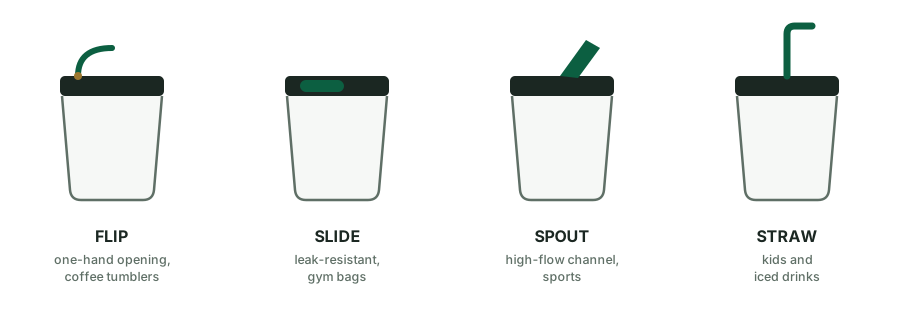
Lids are where most drinkware performance is won or lost. Four main types cover the common formats — flip, slide, spout, and straw — and each balances two competing needs: leak resistance and flow speed. No single design wins both.
The four main lid types
A flip lid gives one-hand opening and fast drinking, which is why it is standard on coffee tumblers and travel mugs. A slide lid covers a smaller opening and resists leaks better, making it a common choice for gym bags. A spout lid channels a high-flow stream for sports bottles, while a straw lid suits kids and iced drinks where sipping beats tilting.
Leak resistance versus flow
| Lid type | Flow speed | Leak resistance | Typical use |
|---|---|---|---|
| Flip | High | Moderate | Coffee tumblers, travel mugs |
| Slide | Moderate | High | Gym, commuting bags |
| Spout | High | Moderate | Sports bottles |
| Straw | Moderate | Moderate–high | Kids, iced drinks |
The seal count is the practical number behind leak claims. A lid with a single gasket has fewer failure points than one with several, and the number of silicone seals usually appears in the bill of materials. More seals can add redundancy, but each additional seal is another part that can be assembled wrong.
Temperature also steers the choice. Hot coffee calls for a flip or slide lid that opens cleanly without splash, while iced drinks and kids cups lean toward straw lids that slow the drinker down and reduce spills.
Lids are also the first part to fail in a dishwasher or a dropped bag. Threaded and slide designs with fewer moving parts tend to survive rough handling better than flip lids with springs, and a removable gasket is easier to clean than one molded in place. These durability details affect return rates in retail.
Practical takeaway: Match the lid type to the buyer’s end use and ask for the silicone seal count before accepting a leak-proof claim.