
Double-Wall Vacuum Insulation
IN DEPTHAlso: vacuum insulation, double-wall construction
Two steel walls with the air between them evacuated, stopping heat loss by conduction and convection.
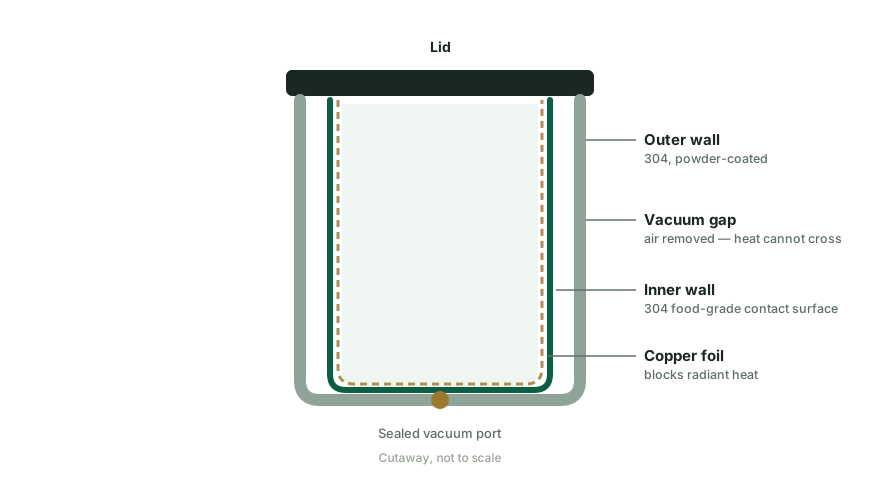
Double-wall vacuum insulation is a construction method, not a material. A bottle is formed from two stainless steel layers — an inner wall that holds the drink and an outer wall you touch — with the air between them pumped out at the sealing stage. With no air to carry heat, conduction and convection are largely removed, and the drink holds its starting temperature far longer than a single-wall vessel.
How each layer does its job
The two steel walls block conduction and convection. A thin copper foil placed between the walls, without touching both at once, reflects radiant heat that would otherwise cross the vacuum gap. That three-part structure is what produces 6-hour and 12-hour temperature ratings, and the diagram above shows how the layers sit.
Reading hot and cold ratings
| Construction element | What it blocks | Practical effect |
|---|---|---|
| Two steel walls | Conduction through metal | Outer wall stays near room temperature |
| Evacuated gap | Convection (moving air) | No air to transfer heat across the gap |
| Copper foil layer | Radiant heat | Slows the last remaining heat path |
The most useful field test for a failed vacuum is condensation. If a cold drink makes moisture appear on the outer wall, heat is crossing the wall, meaning the vacuum has been lost and the vessel will not reach its rated times.
When comparing quotes, ask where the copper foil sits and how the sealed units are tested. A well-made vessel should show no outer-wall condensation in normal use, and a spec-sheet rating should be backed by a documented insulation test on finished units rather than an estimate from material thickness.
Practical takeaway: Specify your required 6-hour or 12-hour rating and confirm the factory tests sealed finished units, not just components.