
12+ Drinkware Inspection Stages: From Material Checks to Final Leak Testing

Direct answer: A reliable drinkware quality control inspection should follow the product from material acceptance through forming, vacuum construction, finishing, lid molding, assembly, leak testing, packaging, and pre-shipment review. The key is not simply having “12 checks,” but defining what is checked, when, by whom, with what method, and against which approved specification.
A finished tumbler can look correct and still fail in use. The steel grade may not match the purchase specification. A neck dimension may be slightly out, creating inconsistent lid fit. A gasket may be seated incorrectly. A coating may match the color target but have poor adhesion. Packaging may protect the product poorly even when the bottle itself passes inspection.
That is why useful quality control is built into the production route rather than saved for the last day. At Watersy, we describe our external quality-control approach as 12+ inspection stages before shipment. This is a buyer-facing description of checkpoints across production—not a claim that every model follows an identical formal IQC/IPQC/OQC document. The precise route, sampling frequency, acceptance criteria, and test conditions should be confirmed for each SKU and purchase order.

What a Drinkware Quality Control Inspection Must Control
Before discussing stages, the buyer and manufacturer need a controlled reference. At minimum, that reference should identify:
- the approved sample or “golden sample”;
- bill of materials, including steel, plastics, silicone, finishes, and accessories;
- critical dimensions and tolerances;
- color and gloss references;
- logo artwork, position, size, and application method;
- lid, gasket, straw, handle, and accessory configuration;
- performance requirements, including leak and thermal tests where applicable;
- unit packaging, carton marks, barcodes, and assortment rules;
- defect classifications and the agreed sampling plan for final inspection.
Without this baseline, inspectors can record observations but cannot make consistent pass/fail decisions. “Good quality” is not an acceptance criterion. A dimension, color tolerance, leak-test method, or approved visual limit is.
A Practical Map of 12+ Inspection Stages
The following map reflects the stages visible in Watersy’s manufacturing flow and quality pages. It is a practical explanation for buyers; actual checkpoints can be added, combined, or adjusted according to product construction and order risk.
1. Incoming Material Verification
The first question is whether the received material matches the order specification. For stainless steel drinkware, checks can include the declared grade and supporting supplier documentation. Plastic pellets, silicone components, coatings, inks, and purchased accessories also need to match the approved bill of materials.
Buyer evidence to request: material specification, lot identification, supplier certificate where relevant, and the factory’s verification record.
2. Formed-Body Dimensions and Appearance
After tube forming, hydroforming, or deep drawing, the body should be checked for dimensions, wall consistency, and visible defects. Neck geometry matters because it affects thread engagement, lid fit, and seal compression later.
Buyer evidence to request: drawing with tolerances, measurement method, and examples of accepted versus rejected cosmetic conditions.
3. Double-Wall Construction Check
Vacuum-insulated products depend on consistent spacing and sound double-wall construction. Irregular geometry can create later problems in vacuum processing or thermal performance.
Buyer evidence to request: the characteristic being checked, the measuring device used, and the frequency of the check for the specific model.
4. Vacuum-Process Verification
The vacuum stage should be controlled against the product’s thermal-performance requirement. The exact production method can vary, so buyers should ask the supplier to connect process records with batch-level thermal verification rather than accept a generic “vacuum passed” statement.
Buyer evidence to request: batch identification, test condition, starting temperature, elapsed time, ambient condition, and acceptance threshold.
5. Internal Reflective Layer or Related Process Check
Where the construction uses an internal reflective copper layer or another specified treatment, the process should be checked for coverage, adhesion, or thickness according to the approved design. This checkpoint is product-specific; it should not be assumed for every drinkware model.
6. Exterior Coating and Finish Inspection
Powder coating, paint, plating, and other finishes need visual and functional controls. The inspection can cover color agreement, gloss, coverage, contamination, scratches, curing, and adhesion. Sampling and durability methods should be written into the order specification rather than inferred from a color swatch alone.
Buyer evidence to request: approved color standard, lighting conditions for visual comparison, adhesion method, and any model-specific durability protocol.
7. Logo and Decoration Check
Laser engraving, screen printing, heat transfer, and embossed decoration fail in different ways. Inspectors should verify artwork version, location, orientation, clarity, adhesion where applicable, and consistency across the lot.
A signed sample is especially important here: a technically readable logo may still be unacceptable if it is off-center or uses the wrong scale.
8. Injection-Molded Lid and Component Inspection
Lids and caps should be checked for dimensions, flash, sink marks, warpage, thread quality, moving-part function, and material conformity. Watersy’s production pages identify 27 injection molding machines used for lid and cap production, which allows the body and closure workstreams to be coordinated within the same manufacturing base.
Buyer evidence to request: cavity identification when relevant, dimensional report, approved resin specification, and functional-fit record.
9. Lid-to-Body Fit and Gasket Placement
Assembly inspection should confirm that the correct lid, gasket, straw, handle, and accessories are fitted to the correct body. Inspectors should look for cross-threading, incomplete engagement, missing or twisted gaskets, excessive operating force, and gaps that may compromise sealing.
10. Finished-Unit Leak Test
Leak testing must be described as a method, not just a checkbox. Define the fill level, water temperature if relevant, closure procedure, orientation, duration, and what counts as leakage. Watersy’s current manufacturing documentation specifies water filling, sealing, and inversion for every assembled unit before packing.
For a buyer, this is a critical distinction: a leak-resistant straw tumbler, a closed screw-cap bottle, and a travel mug may require different use-position claims and test conditions. The test should match the intended closure configuration and claim.
11. Batch Thermal-Performance Test
For vacuum-insulated products, sample units can be checked for temperature retention against an agreed protocol. Capacity, fill volume, starting temperature, lid state, ambient temperature, and time interval all influence results. Therefore, compare suppliers only when the conditions are the same.
A generic “keeps hot for X hours” claim is less useful than a test sheet tied to an SKU, batch, and defined conditions.
12. Packaging and Label Inspection
Before cartons are sealed, the factory should verify the unit box, inserts, protective materials, barcode readability, labels, accessories, carton marks, quantity, and assortment. Packaging defects can create chargebacks, warehouse delays, or transit damage even when the product passes functional inspection.
13. Pre-Shipment Sampling and Release
The final review checks packed goods against the approved order. ISO 2859-1 provides sampling plans indexed by acceptance quality limit (AQL) for lot-by-lot inspection by attributes. It does not mean that one AQL value is automatically correct for every product or defect class. Buyers should agree the inspection level, critical/major/minor definitions, AQL values, lot size, sample size, and disposition rules before production.
Watersy’s current manufacturing page references an AQL 2.5 final inspection. For an actual order, that number should be read together with the approved defect taxonomy and sampling plan, not used as a stand-alone promise.
Buyer Checklist: What to Put in the Quality Plan
Use this checklist before approving mass production:
- Approved sample is signed, dated, and uniquely identified.
- Bill of materials names the steel, plastic, silicone, coating, and accessory specifications.
- Critical dimensions and tolerances are shown on a controlled drawing.
- Cosmetic defect limits include photographs or boundary samples.
- Color, gloss, logo placement, and decoration methods are defined.
- Lid function and gasket installation criteria are written.
- Leak-test setup, duration, orientation, and failure definition are documented.
- Thermal-test conditions and pass criteria are documented for insulated products.
- Packaging, barcode, carton, and assortment requirements are approved.
- Inspection frequency is stated for each checkpoint.
- Final sampling level and AQLs are agreed by defect class.
- Failed-lot containment, rework, reinspection, and approval authority are defined.
- Product-specific compliance evidence matches the actual materials and target market.
- Records can be traced to the production lot and purchase order.
How to Read Certificates and Test Reports Correctly
Management-system certificates and product tests answer different questions. ISO 9001 is a quality-management-system standard; it does not replace product-specific testing. Likewise, a report for one bottle construction, material combination, or color does not automatically cover every SKU.
For U.S. food-contact applications, FDA guidance places responsibility on the manufacturer of a food-contact substance to ensure compliance with applicable authorizations, specifications, and conditions of use. For the EU, food-contact materials placed on the market must comply with Regulation (EC) No 1935/2004, while plastic components can also fall under specific measures such as Regulation (EU) No 10/2011. Buyers should therefore ask whether the report identifies the tested article, component materials, test conditions, issue date, laboratory, and target-market requirement.
In short: verify the certificate holder and scope; then verify the product report separately.
Watersy’s Manufacturing Perspective
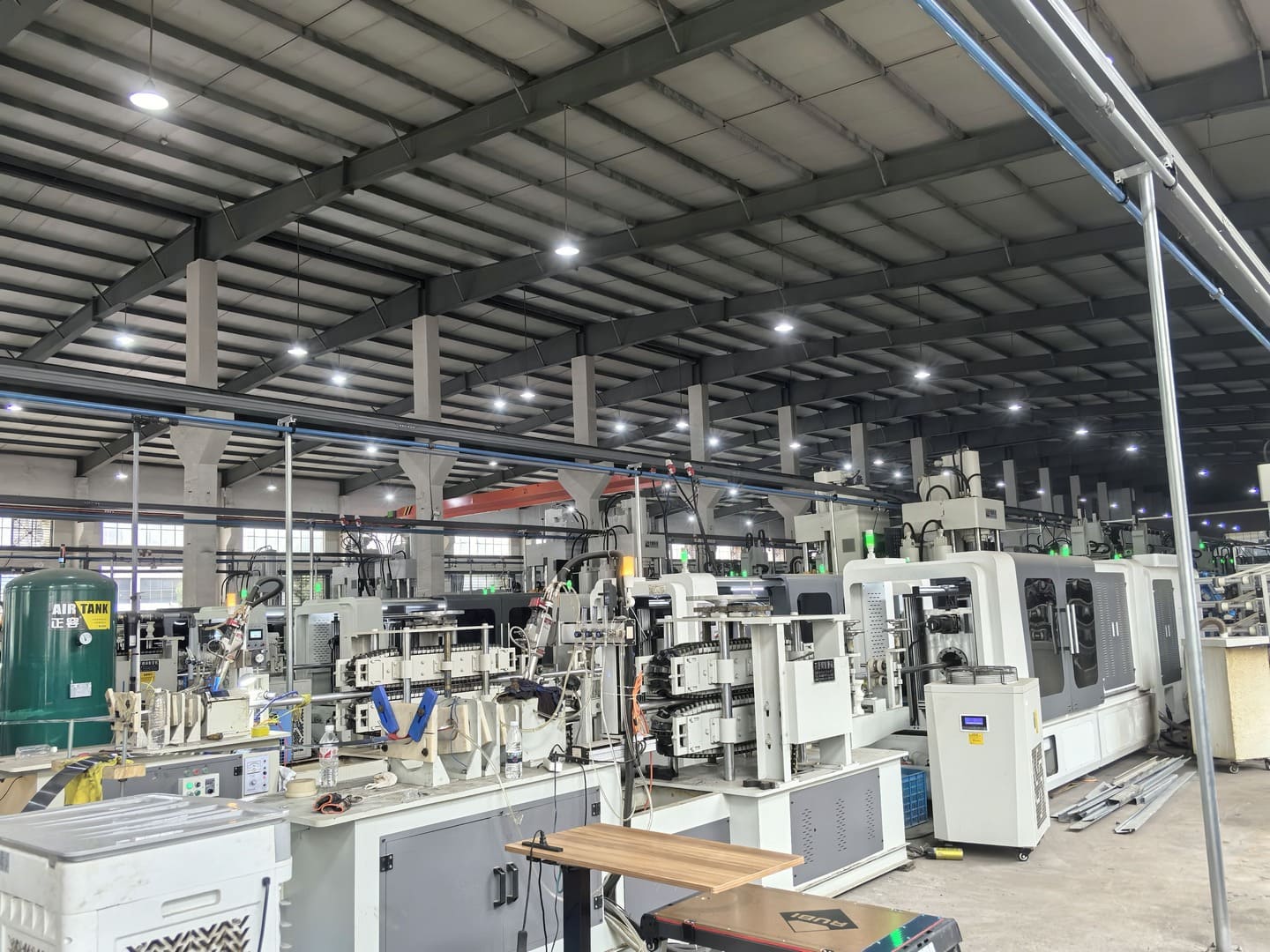
At Watersy, the inspection sequence is easier to coordinate because tube forming, vacuum-related production, coating, lid injection molding, assembly, leak testing, and packing are managed within our Wuyi manufacturing base. The site is documented as 40,000 m² with 300+ employees, 27 injection molding machines, and overall output capacity of 50,000+ units per day across product lines.
Those scale figures do not by themselves prove that a particular order will meet specification. What matters is converting the approved sample and buyer requirements into checkpoints, records, and release criteria. Our 12+ stages are therefore best used as a starting framework for an order-specific plan—not as a substitute for one.
The Bottom Line
Effective drinkware quality control inspection is a chain of controlled decisions. Material identity affects forming; forming affects vacuum construction; molding affects fit; assembly affects leakage; packaging affects delivery condition. When each checkpoint has a specification, method, frequency, record, and escalation rule, final inspection becomes confirmation—not the first time anyone discovers a problem.
Planning a stainless steel bottle, tumbler, or vacuum flask order? Contact Watersy to request an order-specific quality plan covering your materials, finish, closure, performance tests, packaging, and pre-shipment inspection criteria.